
Treatment completed by Dr Pooneh Shahab
Complex Maxillary Rehabilitation with Zirconia Crowns, Bridges and a Cobalt-Chromium Partial Denture — Three-Year Follow-Up
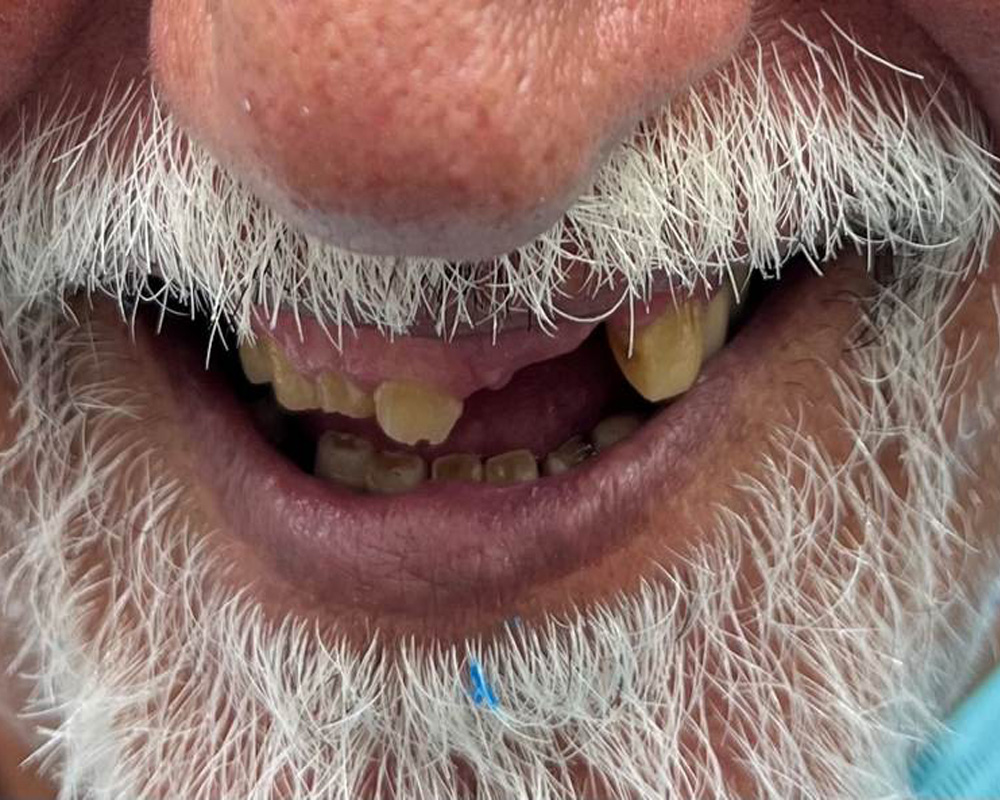 Pre-treatment — Initial smile
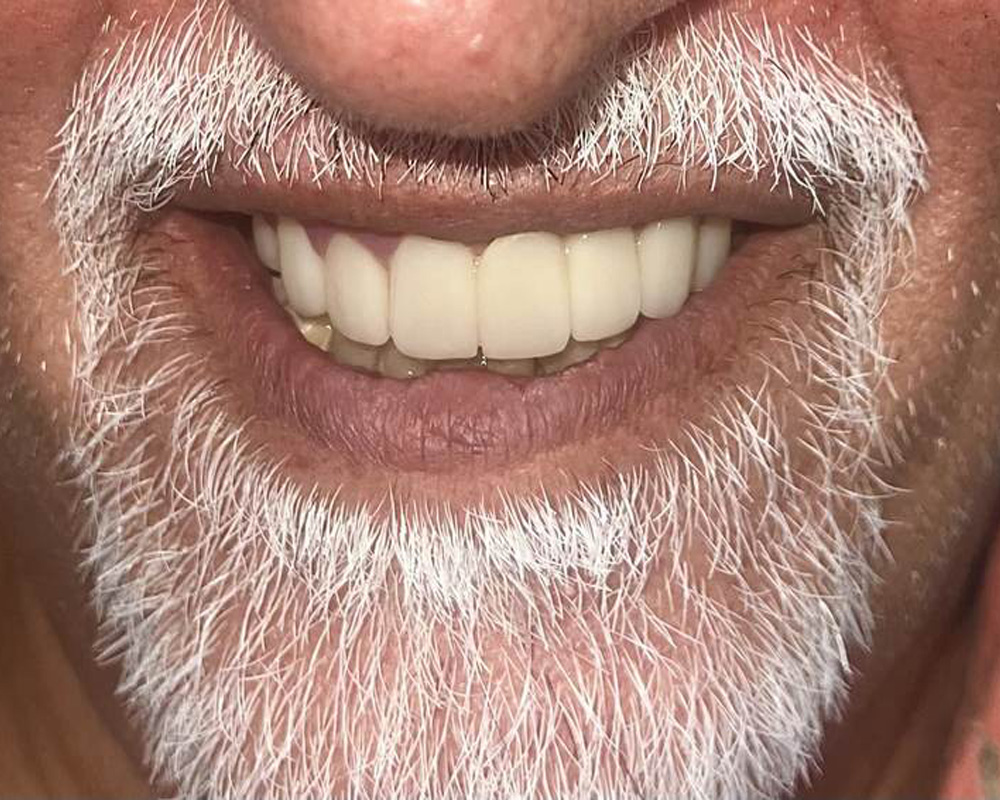 Post-treatment — Three-year follow-up
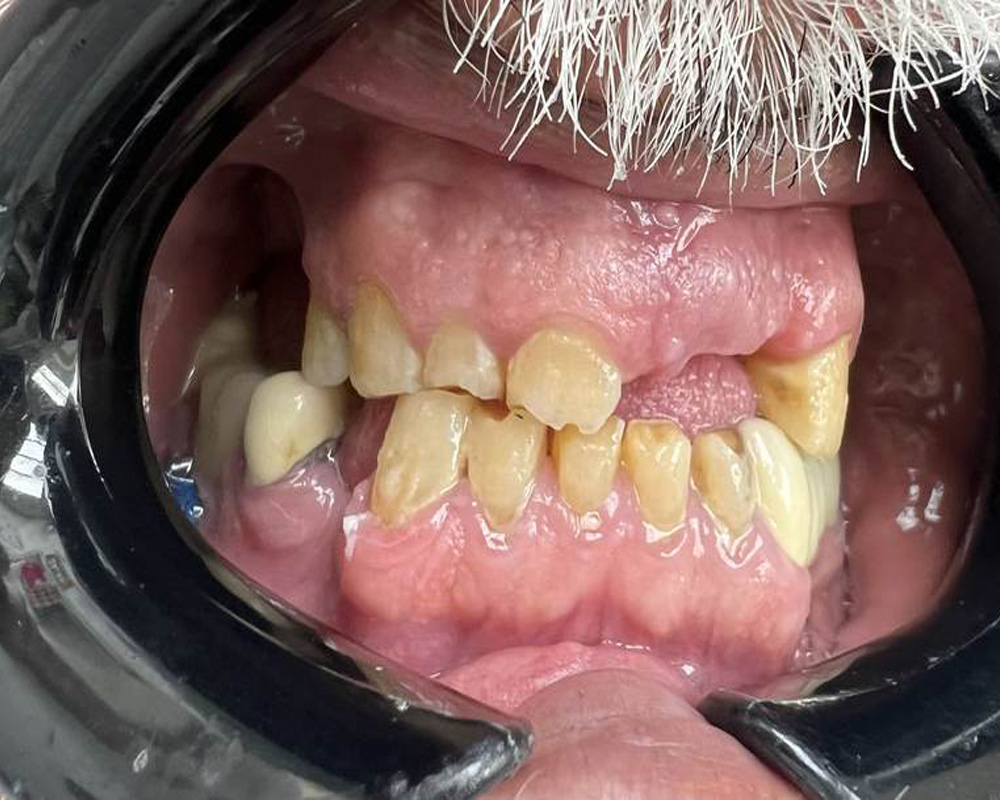 Pre-Treatment
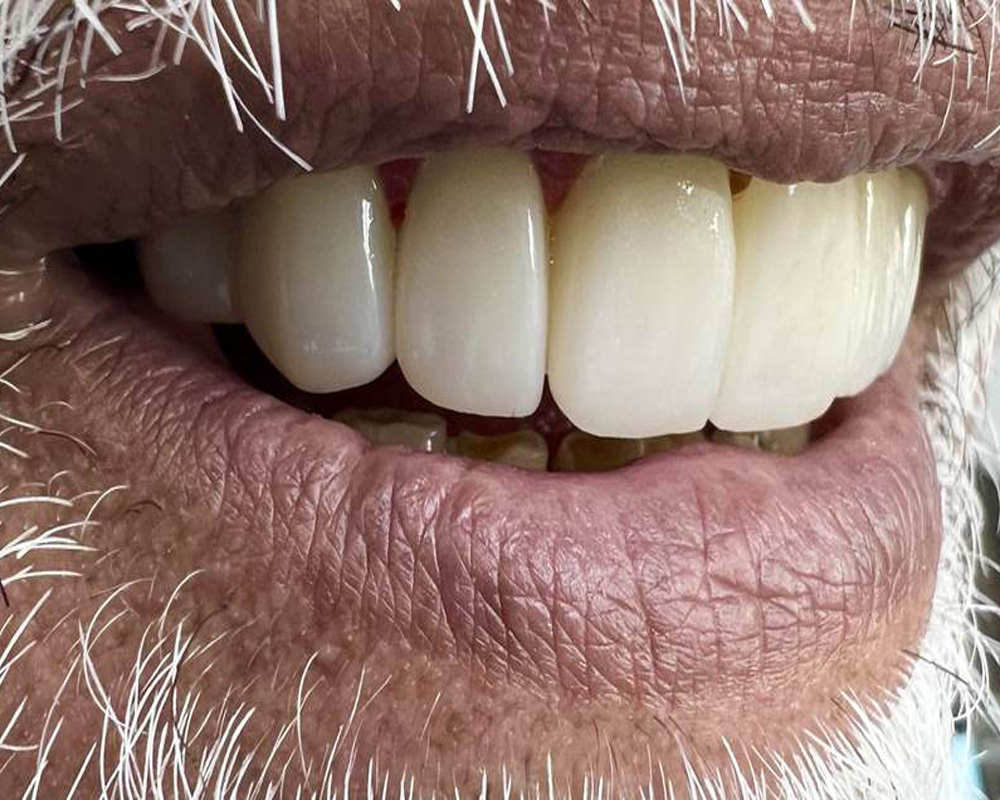 Post-treatment — Three-year follow-up
Pre-treatment: Two photographs taken at the initial presentation.
Post-treatment: Two photographs taken at the three-year follow-up.
This complex maxillary rehabilitation addressed severe tooth wear, reduced visible clinical crown height and multiple missing posterior teeth.
Laser reshaping of the gum margins (laser gingivectomy) was performed where clinically indicated, increasing the visible clinical crown height by approximately 1mm in selected maxillary areas. Worn incisal tooth structure was also restored. The final tooth length and proportions were therefore developed through a combination of gingival and incisal changes.
Following detailed assessment of the patient’s bite and available restorative space, the vertical dimension was carefully increased by approximately 2 mm anteriorly and 1 mm posteriorly. This increase was established entirely through the maxillary rehabilitation, with the bite reorganised at a stable and reproducible jaw position.
All remaining natural teeth were retained. No teeth were extracted, and no teeth required root canal treatment during the rehabilitation.
The planned changes were assessed with provisional restorations for more than one month. During this phase, the patient’s comfort, function, adaptation and bite stability were reviewed before proceeding with definitive treatment.
The remaining maxillary teeth were restored with monolithic zirconia crowns and bridges. Missing posterior teeth were replaced with a cobalt-chromium removable partial denture.
The mandibular arch received restorative treatment only during this phase and was not used to establish the increase in vertical dimension. Further definitive treatment of the mandibular arch has been reserved for a separate future phase.
The assessment, treatment planning, laser gingivectomy, provisional phase, fixed crown-and-bridge treatment and removable prosthodontic treatment were planned and completed by Dr Pooneh Shahab.
Important Information
Complex maxillary rehabilitation is individually planned. Whether changes to tooth length or vertical dimension are suitable and achievable depends on individual clinical findings, including the existing bite, available restorative space, smile line, condition of the teeth and supporting tissues, pattern of missing teeth and adaptation during the provisional phase.
Potential risks may include sensitivity or pulpal complications that may require root canal treatment, gingival healing or contour changes, adaptation to the altered bite or removable partial denture, postoperative discomfort, pressure areas requiring denture adjustment, chipping or fracture of restorations, and the need for ongoing adjustment, maintenance, repair or replacement.
The outcome shown is specific to this patient and does not necessarily reflect the results other patients may experience.