Treatment completed by Dr Pooneh Shahab
Full-Mouth Aesthetic and Restorative Rehabilitation with Layered IPS e.max and Implant Treatment — Three-Year Follow-Up
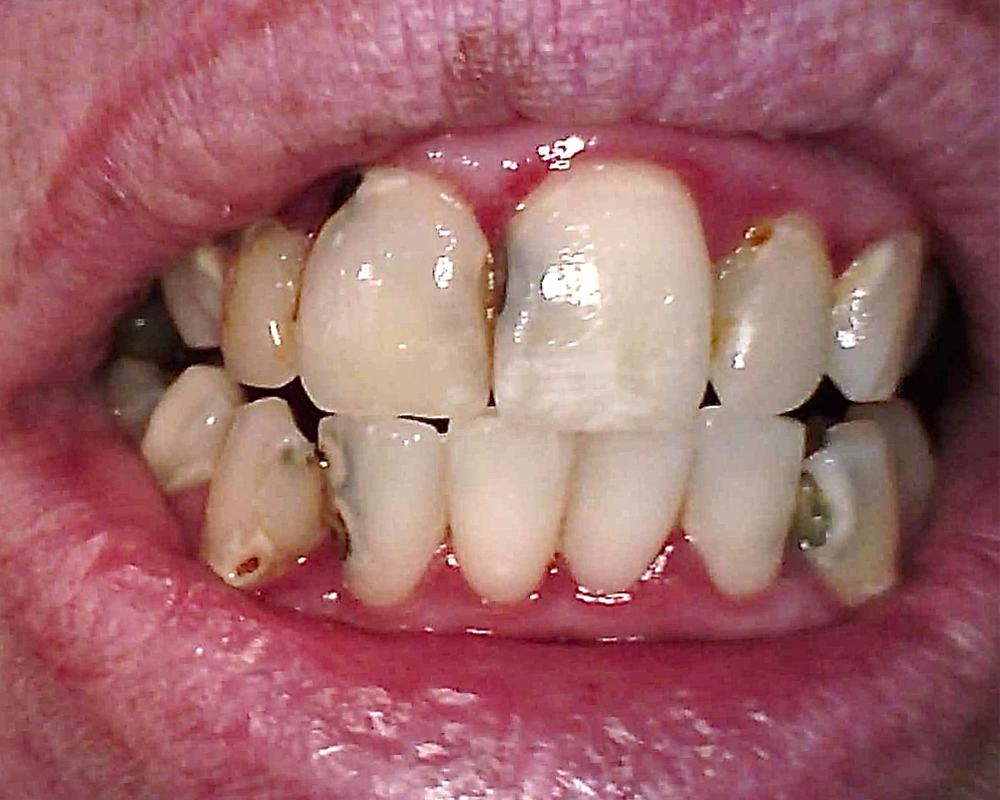 Initial presentation — Initial clinical view
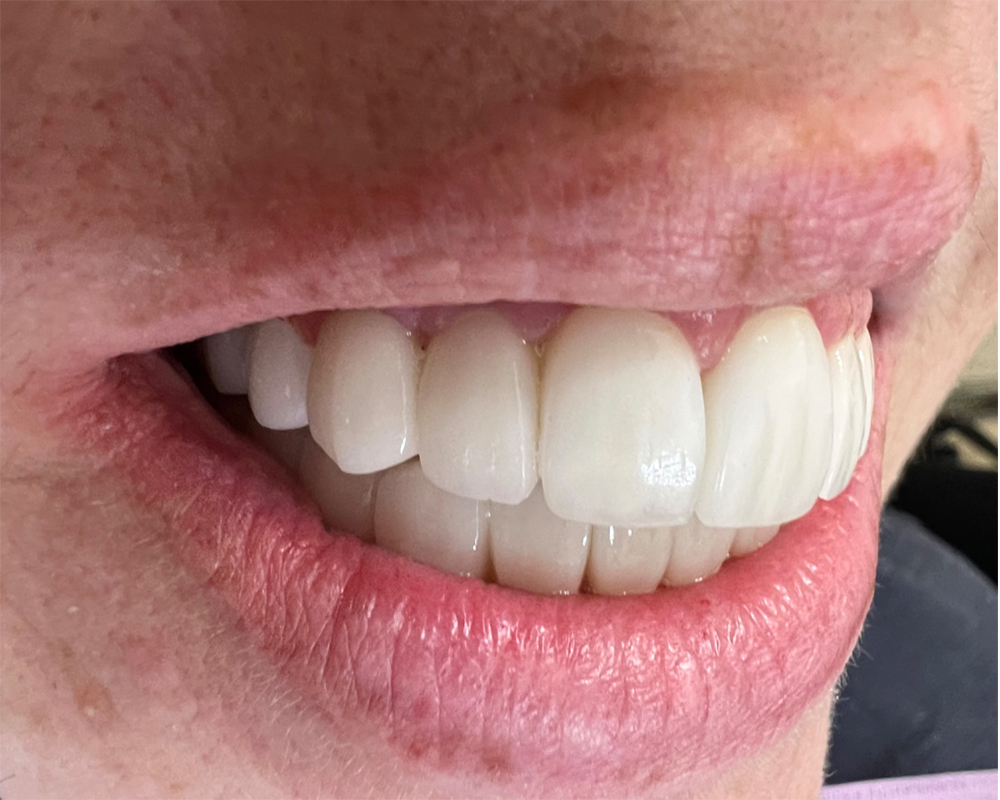 Approximately 3-year follow-up
Pre-treatment: The initial photographs demonstrate crowding, irregular tooth position and aesthetic and restorative concerns involving both the maxillary and mandibular arches.
Post-treatment: The follow-up photographs were taken three years after completion of the definitive treatment.
This extensive 22-unit full-mouth aesthetic and restorative rehabilitation involved both the maxillary and mandibular arches.
Treatment planning considered the existing tooth structure, previous restorations, tooth position, aesthetic requirements and the individual restorative needs of each tooth.
Preparation and restoration design was individualised for each tooth according to its remaining natural tooth structure, existing restorations, and specific functional and aesthetic requirements.
The rehabilitation incorporated a combination of veneers, partial-coverage and three-quarter restorations, and selected full-coverage crowns. This tooth-specific approach allowed suitable natural tooth structure to be preserved wherever clinically appropriate.
All 22 definitive ceramic restorations were fabricated using layered IPS e.max.
One tooth required extraction and was replaced with a dental implant, and one tooth required root canal treatment as part of the rehabilitation. No further root canal treatment was required throughout the three-year follow-up period.
The assessment, treatment planning, individualised tooth preparations and delivery of all definitive restorations were completed by Dr Pooneh Shahab.
Important Information
Full-mouth aesthetic and restorative rehabilitation is individually planned.
The type and extent of preparation required depend on individual clinical findings, including the remaining tooth structure, existing restorations, tooth position, bite, aesthetic objectives and condition of the teeth and supporting tissues.
Veneers, partial-coverage restorations and crowns are not interchangeable treatments. The restoration selected for each tooth depends on its individual structural, functional and aesthetic requirements.
Potential risks may include sensitivity or pulpal complications that could require root canal treatment, postoperative discomfort, gingival changes, occlusal adjustment, loss of retention, debonding, chipping or fracture of ceramic restorations, and the need for ongoing maintenance, repair or replacement.
The outcome shown is specific to this patient and does not necessarily reflect the results other patients may experience.