Treatment completed by Dr Pooneh Shahab
Full-Mouth Rehabilitation with Crowns, Bridges and Dental Implants — Three-Year Follow-Up
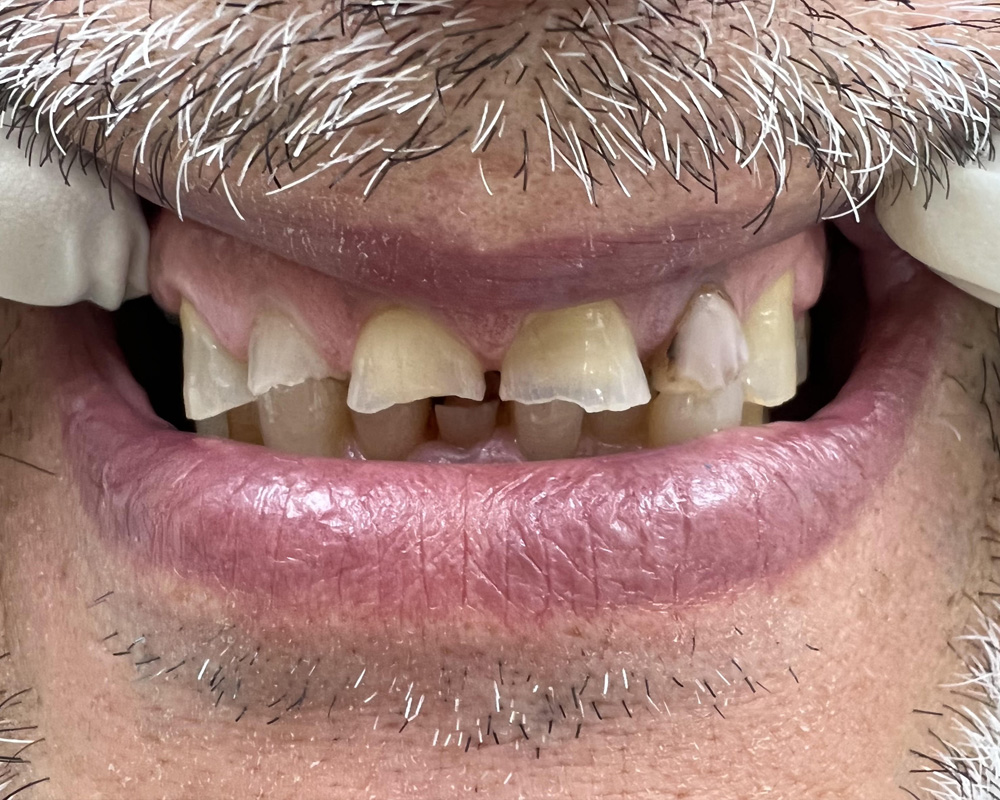 Pre-treatment — Initial consultation
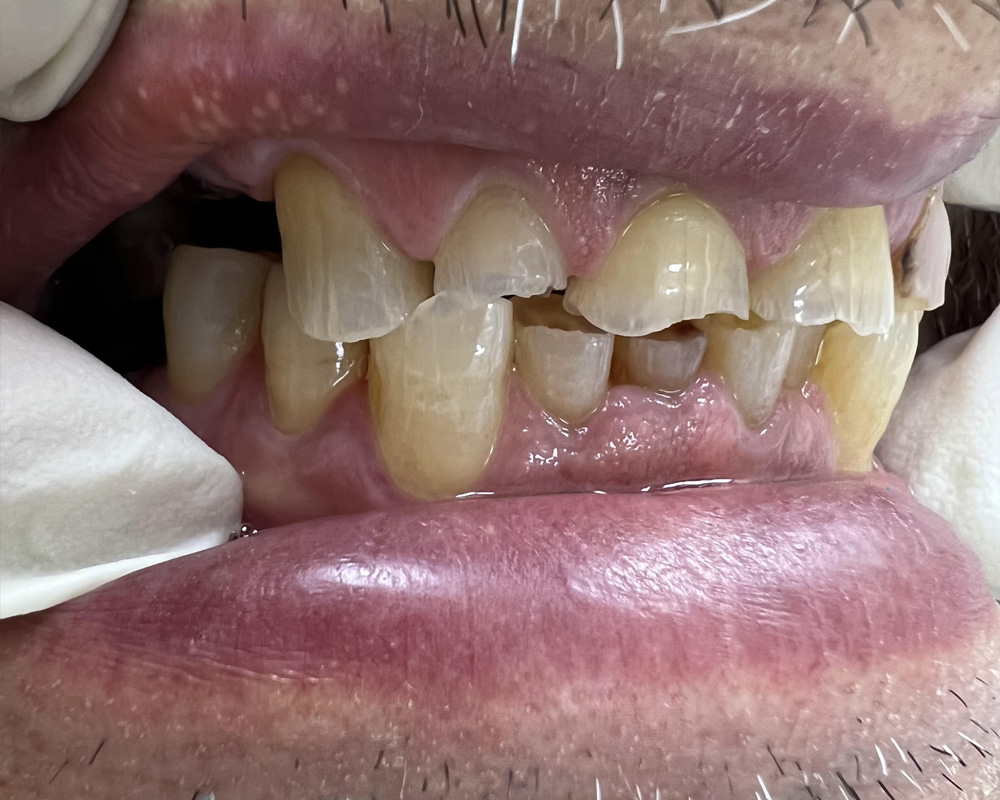 Pre-treatment — Initial consultation
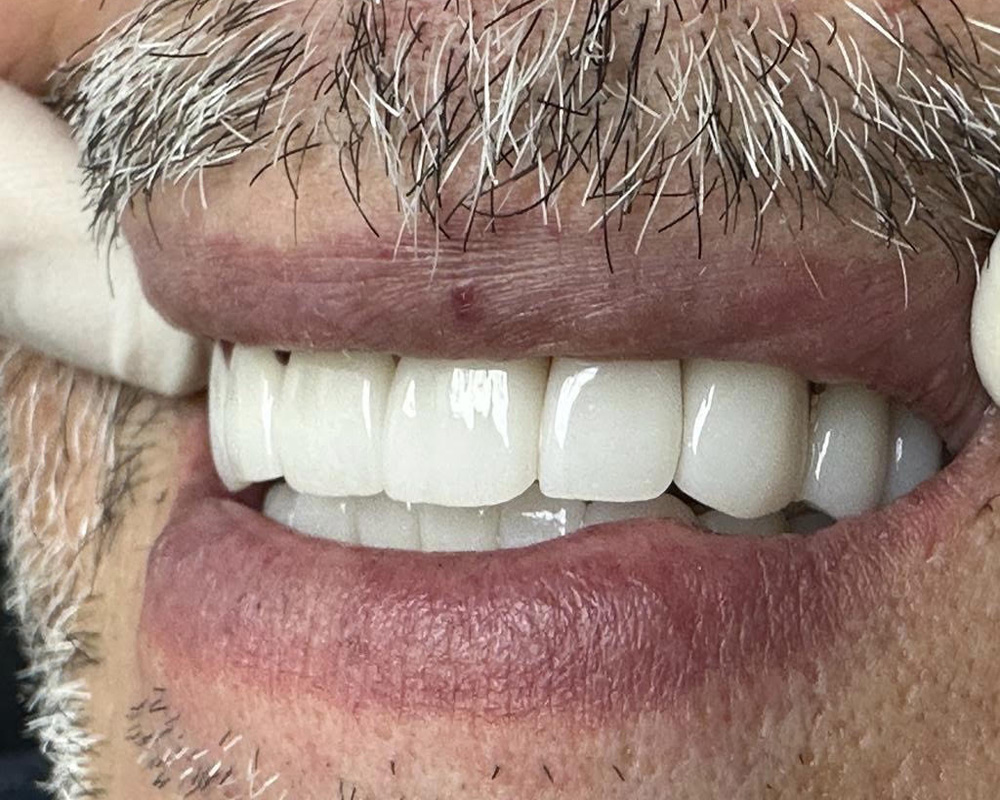 Post treatment - Three year follow up
 Post treatment - Three year follow up
Pre-treatment:
Two photographs taken at the initial consultation.
Post-treatment:
Photograph taken three years after completion of treatment.
This complex full-mouth rehabilitation addressed severe tooth wear and pre-existing missing teeth through a combination of monolithic zirconia crowns and bridges, together with dental implants used to replace missing teeth.
No teeth were extracted as part of this treatment. A conservative, tooth-preserving restorative approach was used to retain all remaining natural teeth and preserve healthy tooth structure wherever clinically appropriate. No previously vital teeth required root canal treatment during the rehabilitation. Two teeth with pre-existing root canal treatment were endodontically retreated.
Following a detailed assessment of the patient’s bite and available restorative space, the vertical dimension was carefully increased by approximately 3 mm anteriorly and 1.5 mm posteriorly. The bite was reorganised at a stable and reproducible jaw position.
The duration of the provisional phase varies according to the clinical requirements of each case. In this case, the planned changes were assessed with provisional restorations for more than one month. During this phase, the patient’s comfort, function, adaptation and bite stability were reviewed before proceeding with definitive treatment.
The assessment, treatment planning, root canal retreatment, implant placement and restoration, and all crown-and-bridge treatment were completed by Dr Pooneh Shahab.
Important Information
Full-mouth rehabilitation is individually planned. Whether an increase in vertical dimension is suitable and achievable depends on individual clinical findings, including the existing bite, available restorative space, the condition of the teeth and supporting tissues, and the patient’s adaptation during the provisional phase.
Depending on the treatment required, potential risks may include sensitivity or pulpal complications that may require root canal treatment, adaptation to changes in the bite, postoperative pain or swelling, infection, delayed healing or failure of an implant to integrate, chipping or fracture of restorations, and the need for ongoing maintenance, repair or replacement.
The outcomes shown are only relevant for this patient and do not necessarily reflect the results other patients may experience.